Topology Optimization for Multi-Axis Additive Manufacturing
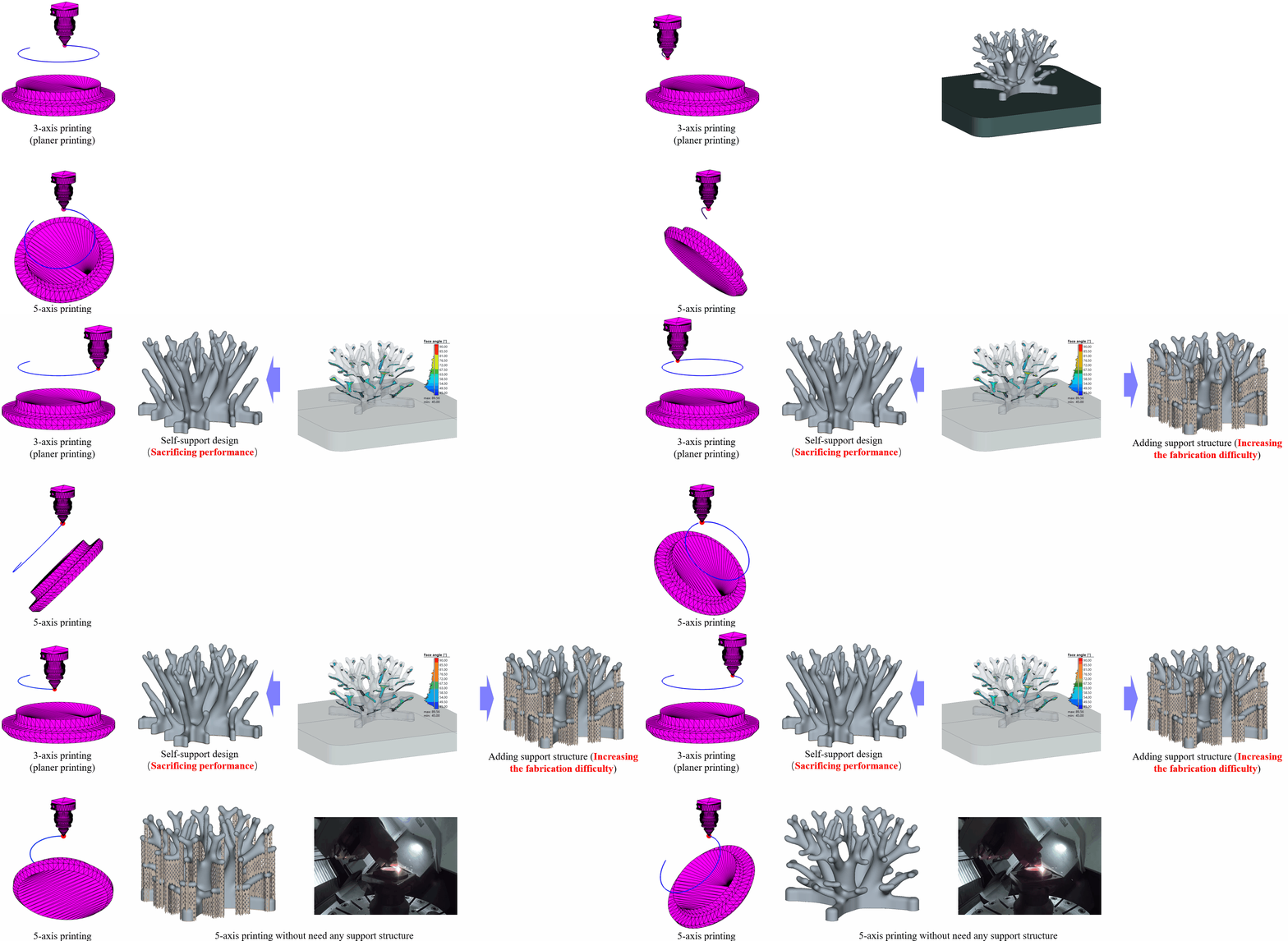
Conventional additive manufacturing is limited by material self-support requirements. Designers must either compromise structural performance to obtain self-supporting geometry or add supports that can be difficult to remove. Multi-axis additive manufacturing offers a promising way to reduce these restrictions.
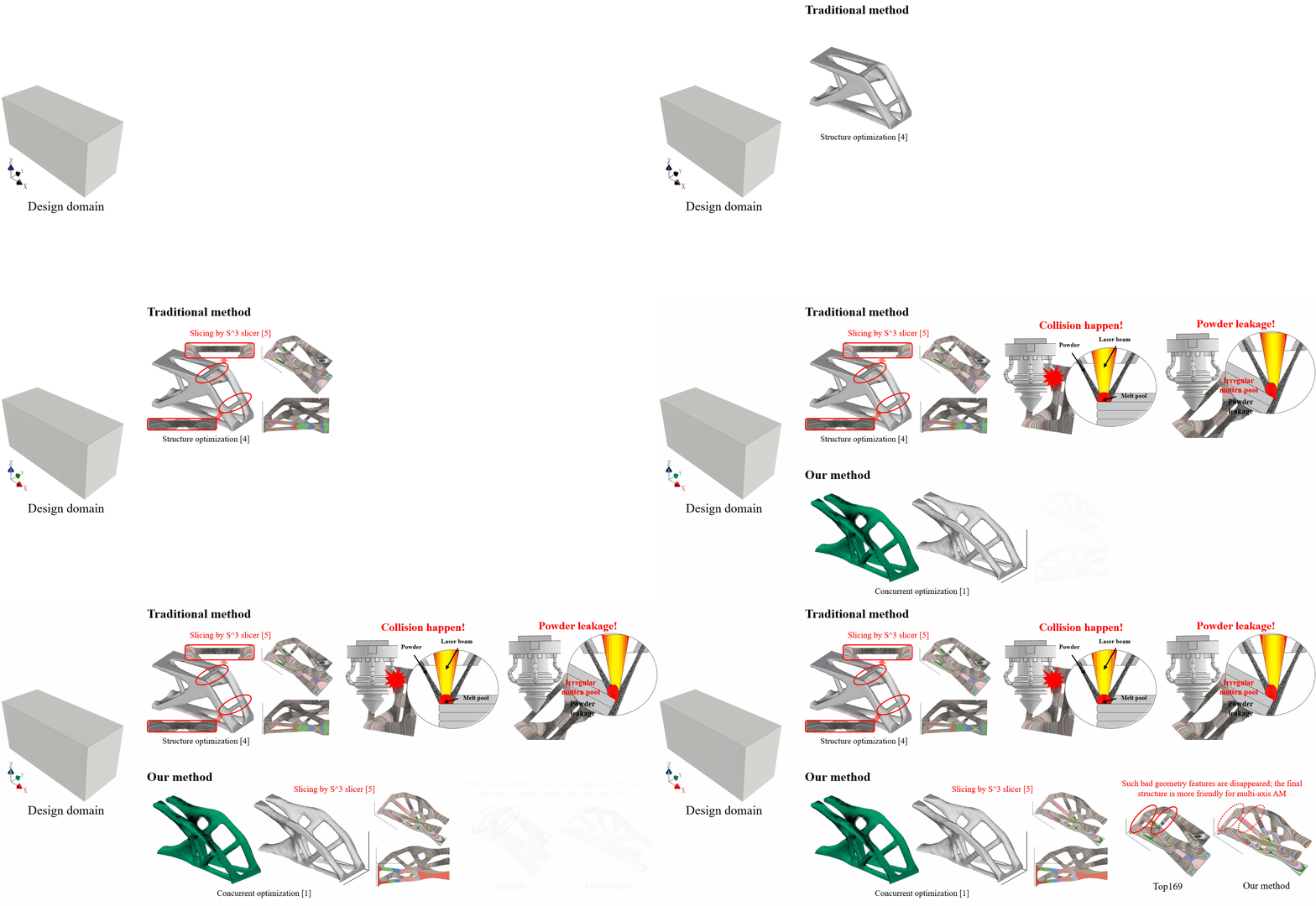
Multi-axis motion does not make every structure automatically manufacturable. Platform rotation and deposition-path planning introduce collision risks, while local overhang angles still constrain feasible printing. The structure and process therefore need to be designed concurrently.
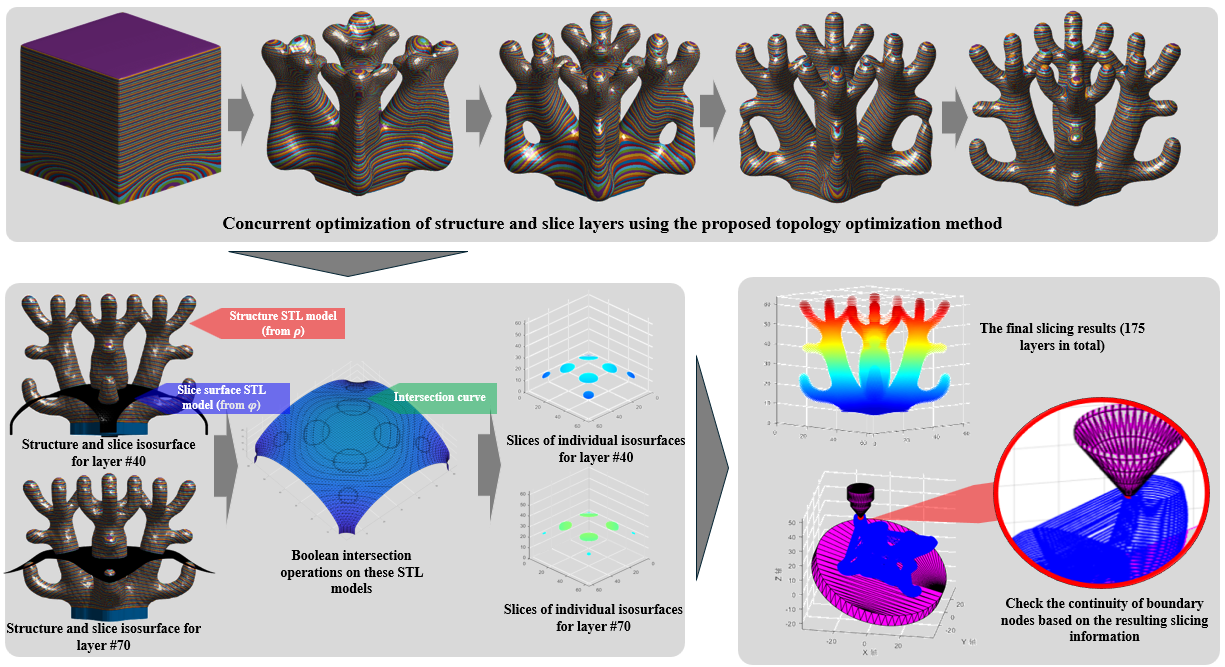
The framework simultaneously optimizes structural topology and curved-layer slicing. It maintains feasible forming angles, improves layer quality, and avoids potential collisions during fabrication.
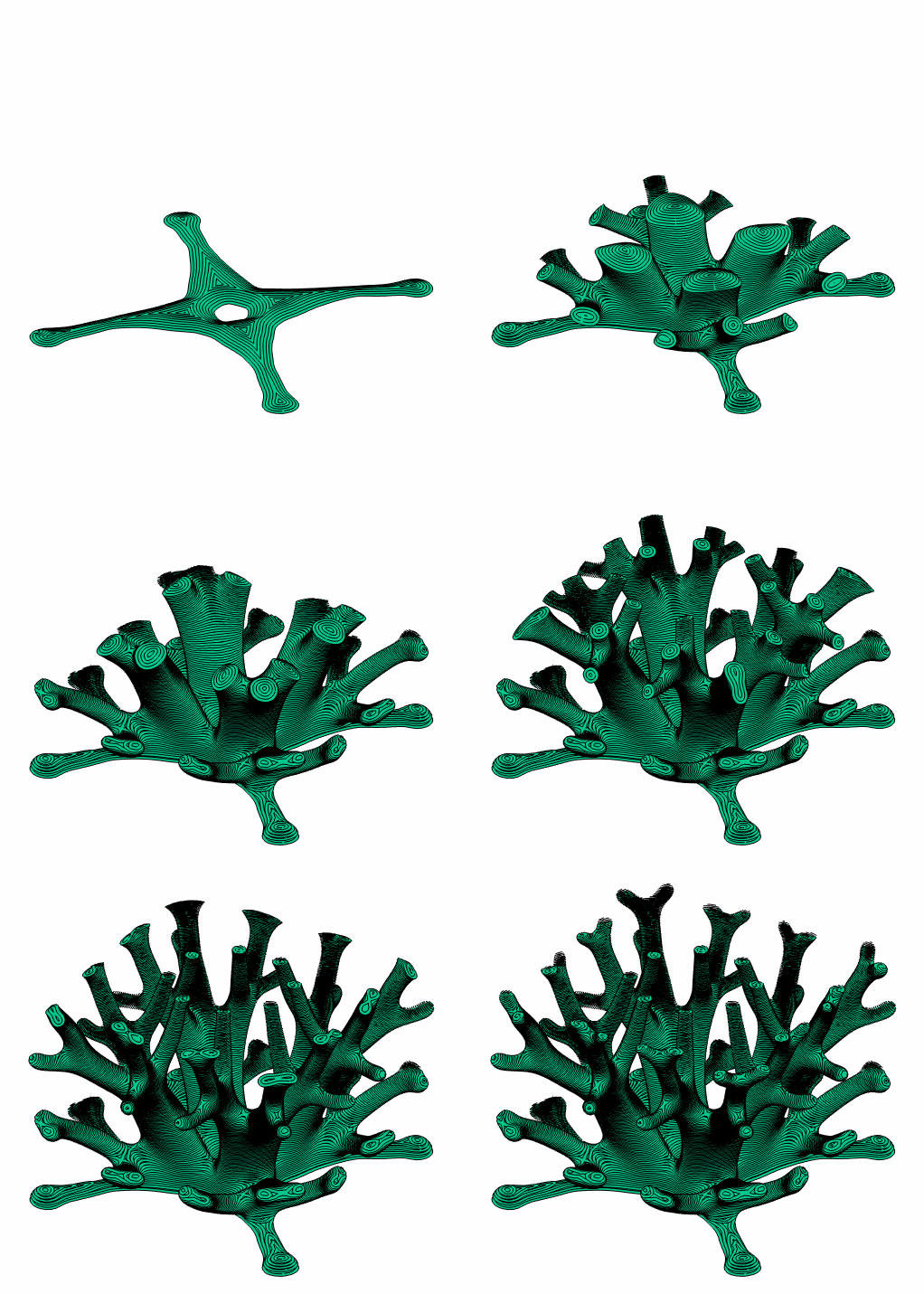
Curved-layer slicing process.
An in-house post-processing algorithm converts the optimized design and slicing result into G-code that can be executed by a multi-axis additive manufacturing system.
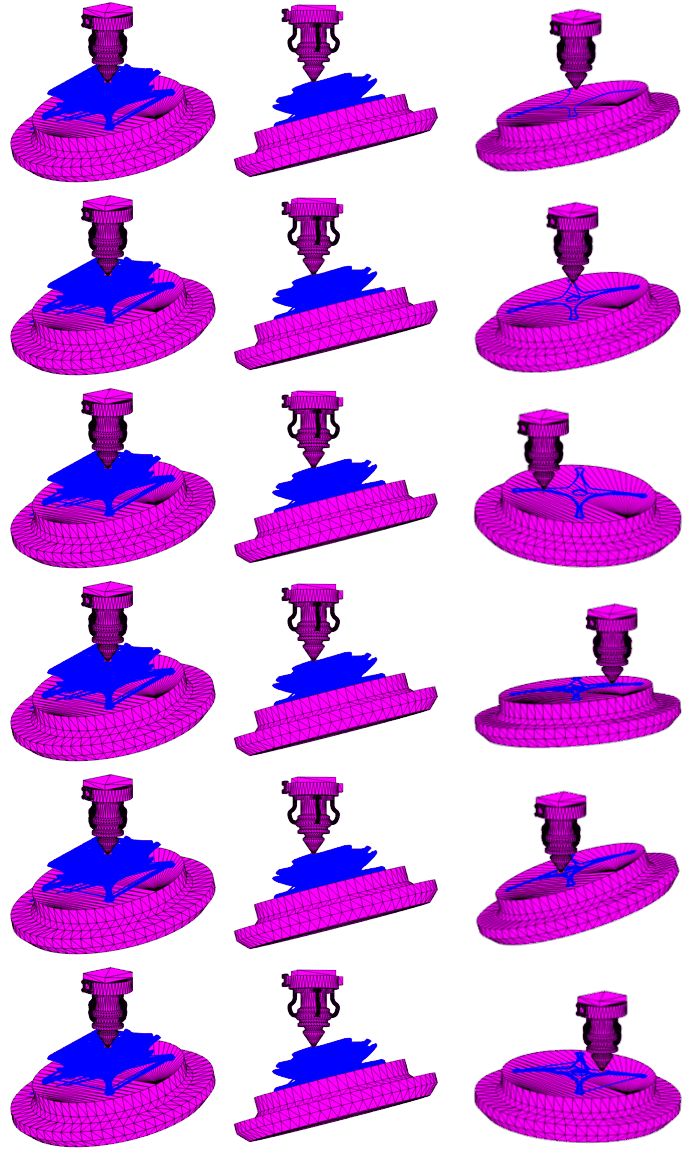
Validation of the generated printing path. Dynamic motion optimization is outside the present scope.
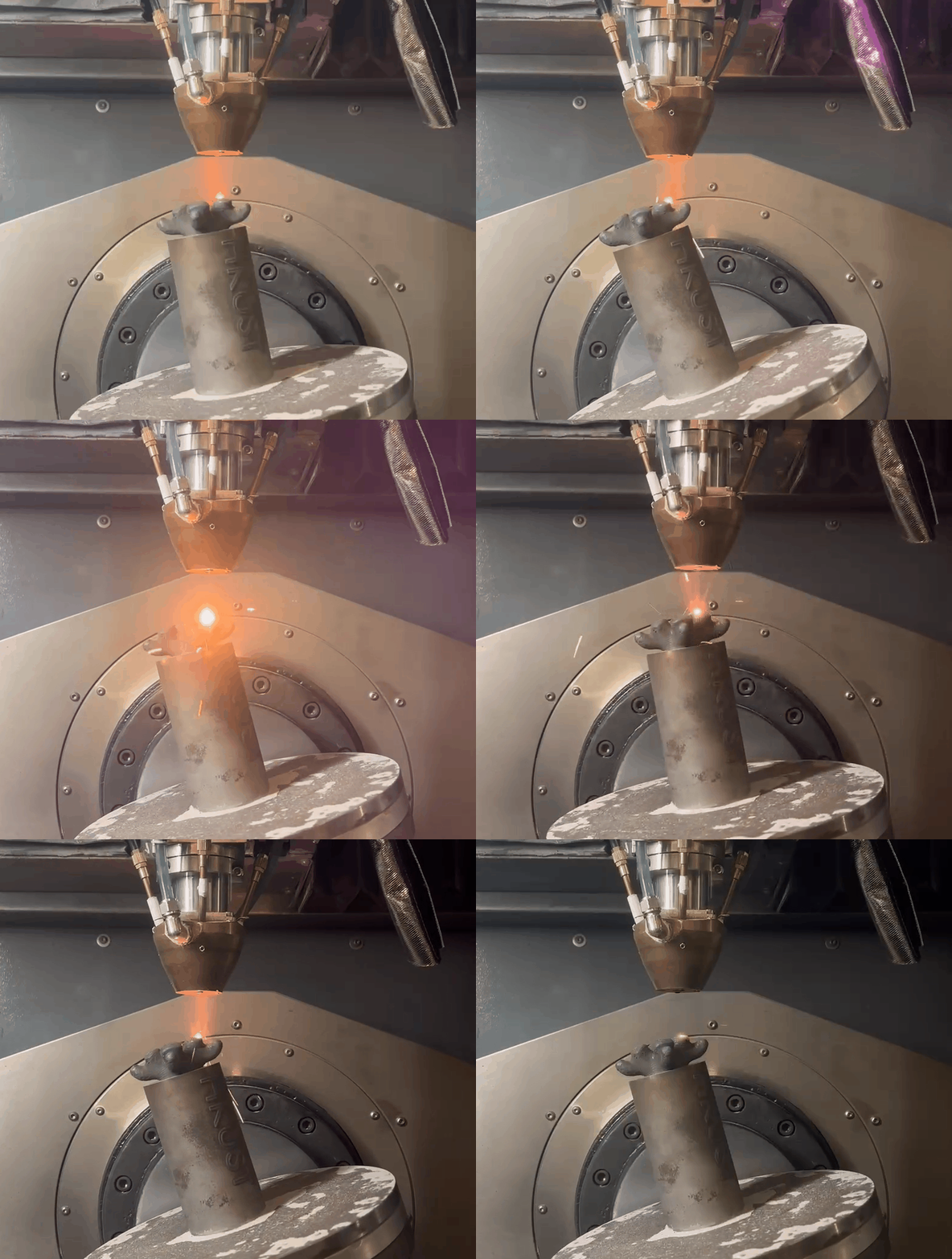
Fabrication process.
[1] Xu, S., Liu, J., He, D., Tang, K., & Yaji, K. (2025). Self-support structure topology optimization for multi-axis additive manufacturing incorporated with curved layer slicing. Computer Methods in Applied Mechanics and Engineering, 438, 117841.