
方向三:Geometry-Driven Topology Optimization
1. Geometry-Driven Topology Optimization Using B-Spline Geometric Primitives
We develop geometry-driven topology optimization methods based on B-spline geometric primitives. Optimized structures are represented by editable centerlines and sectional profiles, enabling direct reconstruction as parameterized, manufacturing-compatible CAD models.
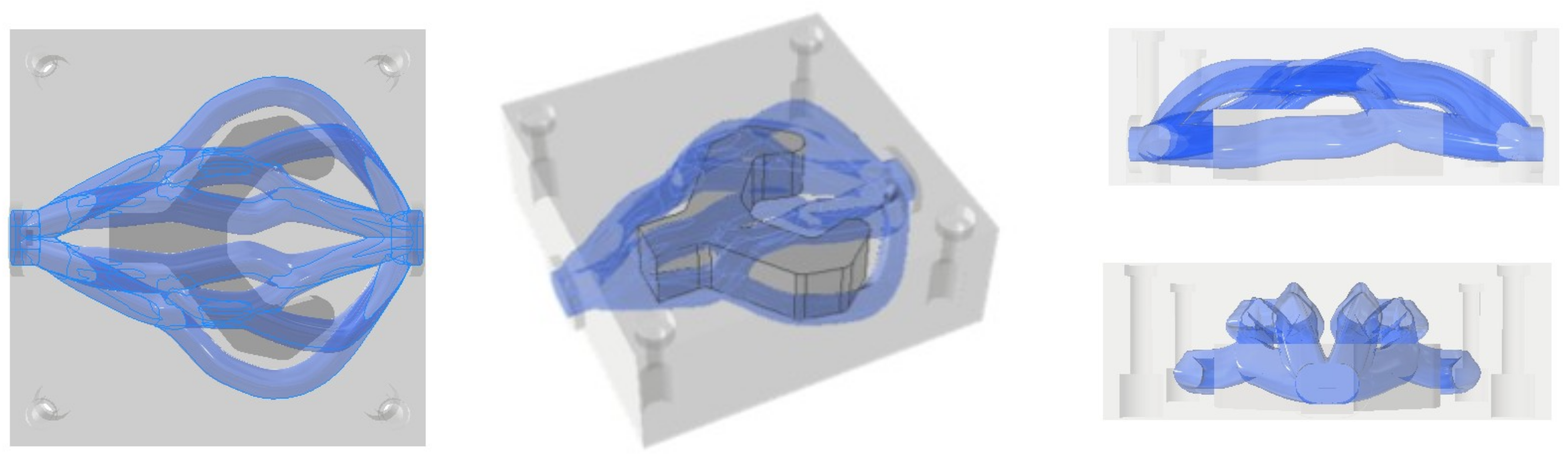
1.1. Geometry-Driven Thermal-Fluid Topology Optimization Using B-Spline Geometric Primitives 专攻方向
A differentiable thermal-fluid optimization framework based on editable, parameterized, and manufacturing-compatible B-spline loft features.
Project Page →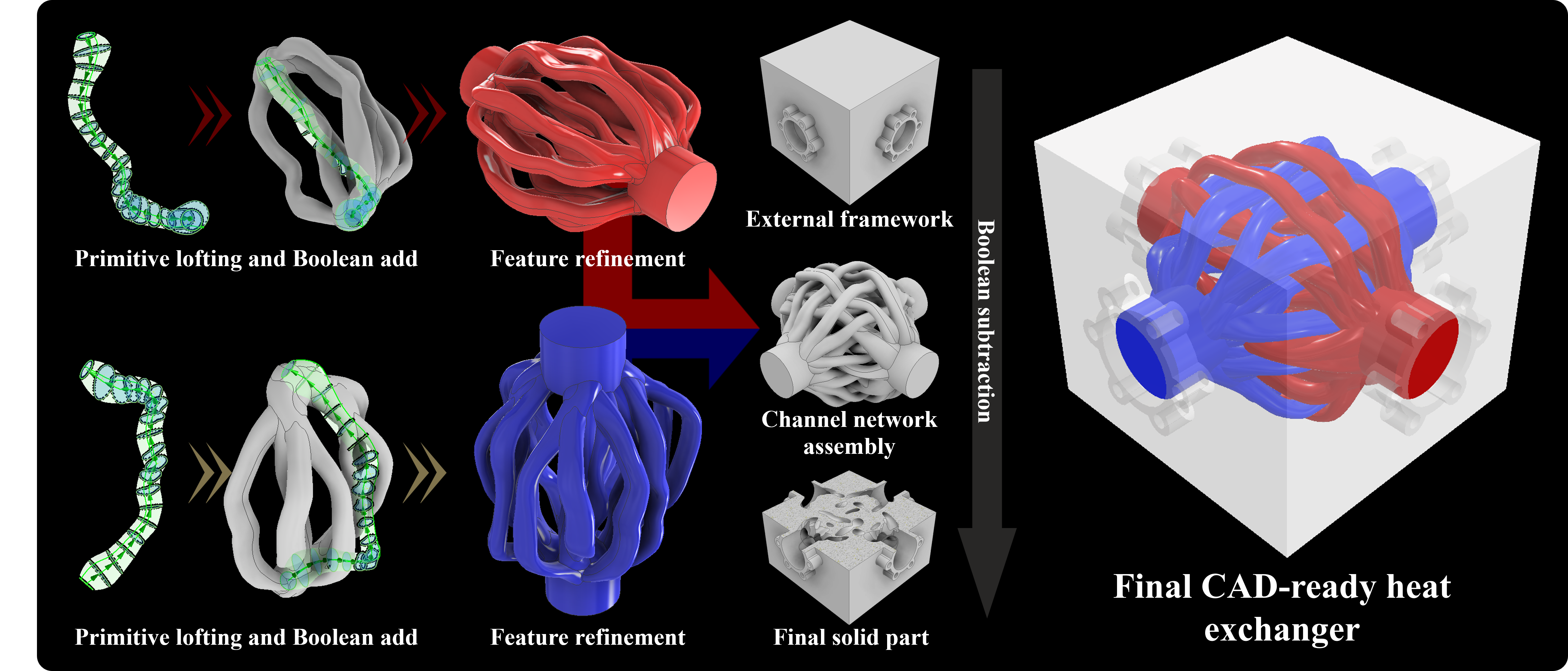
1.2. Explicit Geometry-Driven Topology Optimization for Dual-Flow Heat Exchangers 专攻方向
Geometry-driven thermal-fluid optimization of compact dual-flow heat exchangers, balancing heat-transfer performance and flow resistance.
Related Publications →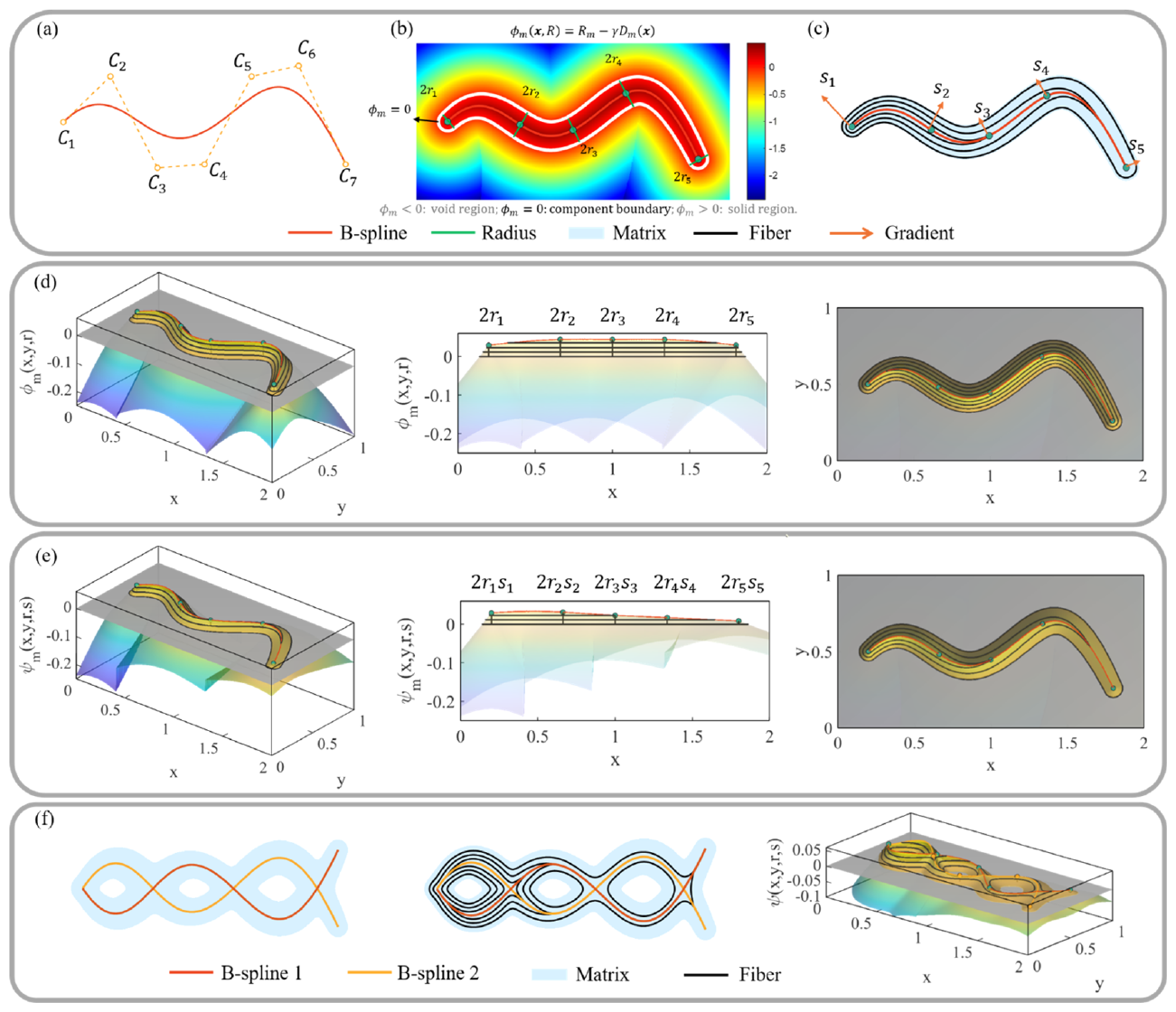
1.3. Topology Optimization of Additively Manufactured Continuous Fiber-Reinforced Composites Using B-Spline Components 专攻方向
A geometry-driven framework for concurrent structural topology, continuous fiber-path, spacing, and fiber-content optimization.
Project Page →